Poetry
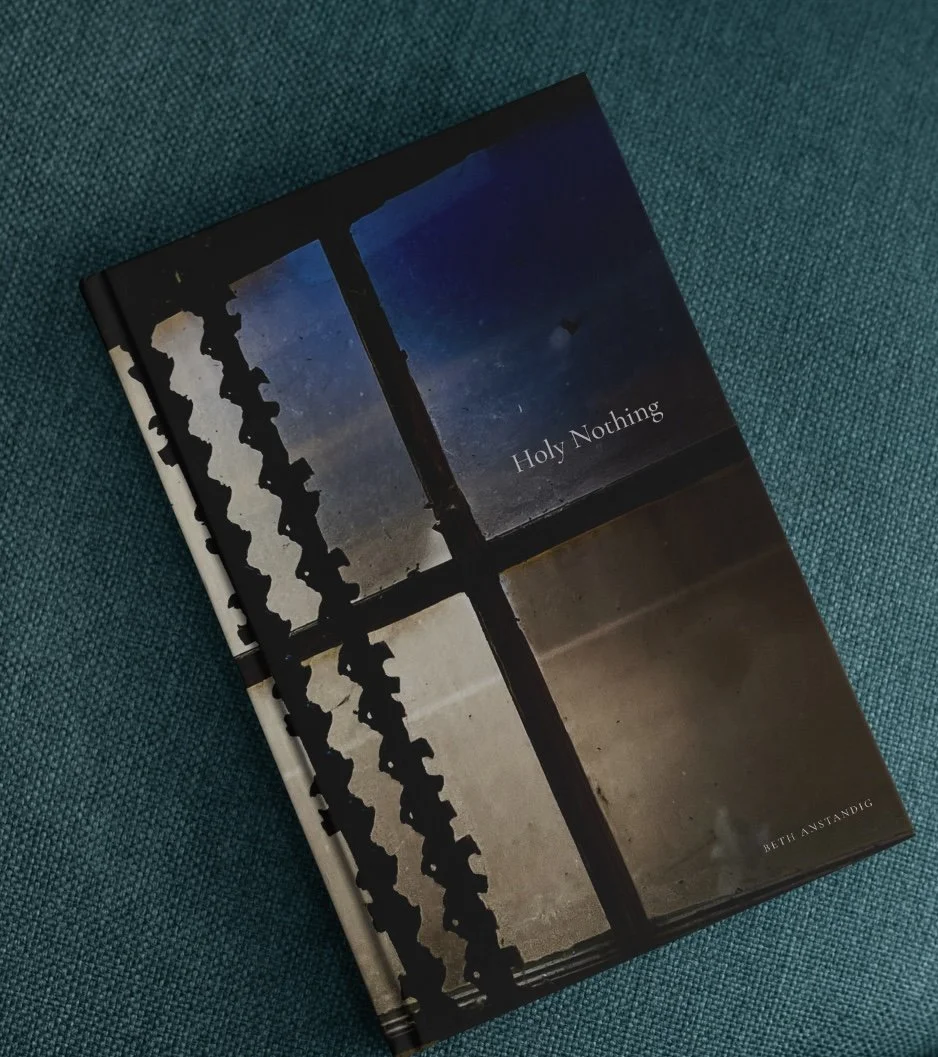
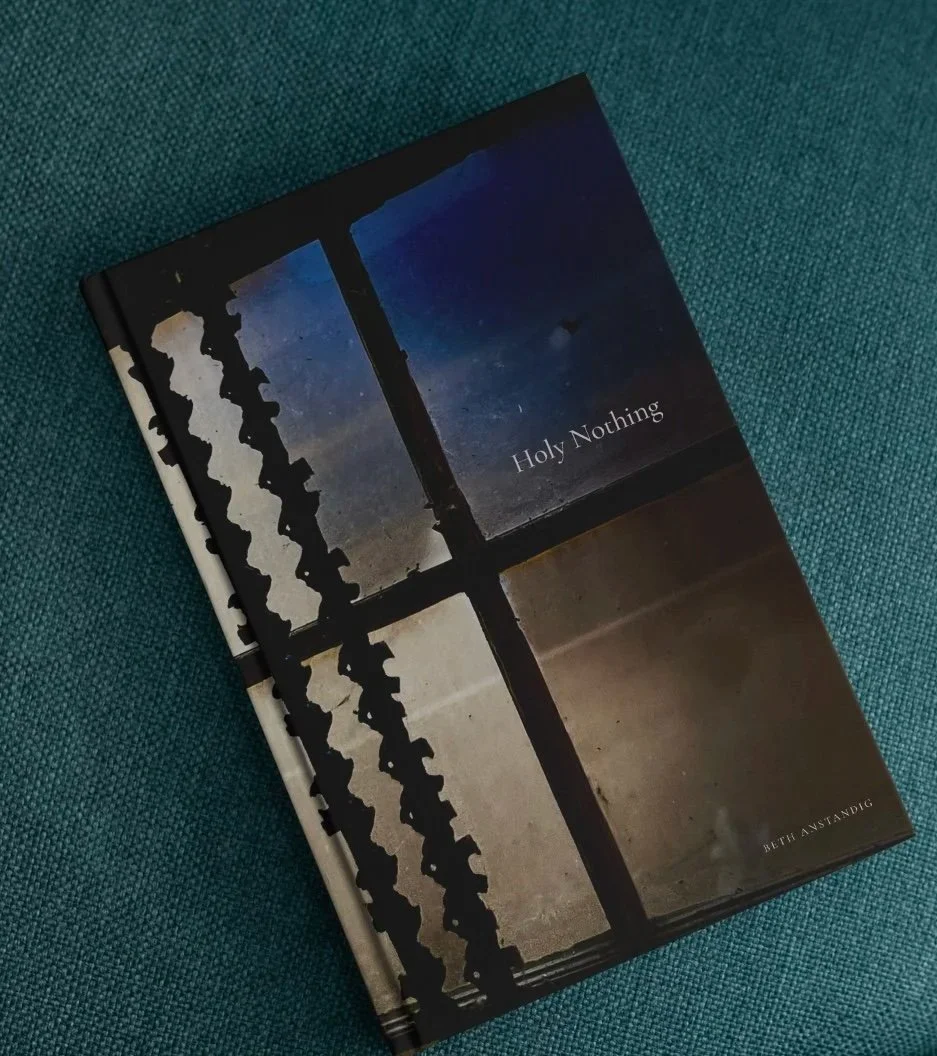
HOLY NOTHING
Forthcoming Fall 2026
Moonstone Press
Stay tuned for upcoming
readings and events!
Advance Praise for Holy Nothing
“Anstandig’s lyric intelligence moves between the philosophical and the visceral, between the ordinary astonishments of the natural world and the sometimes brutal intimacies of human attachment. What emerges is not a poetics of transcendence, but something more compelling—a poetics of attention, of surrender without resignation, of learning to inhabit the unanswerable without demanding its resolution. Holy Nothing reminds us that emptiness is never simply empty, and that sometimes the most radical act of knowing is to relinquish the need to know.”
Ruth Ellen Kocher, Distinguished Professor, University of Colorado Boulder, author of Archon / After and godhouse
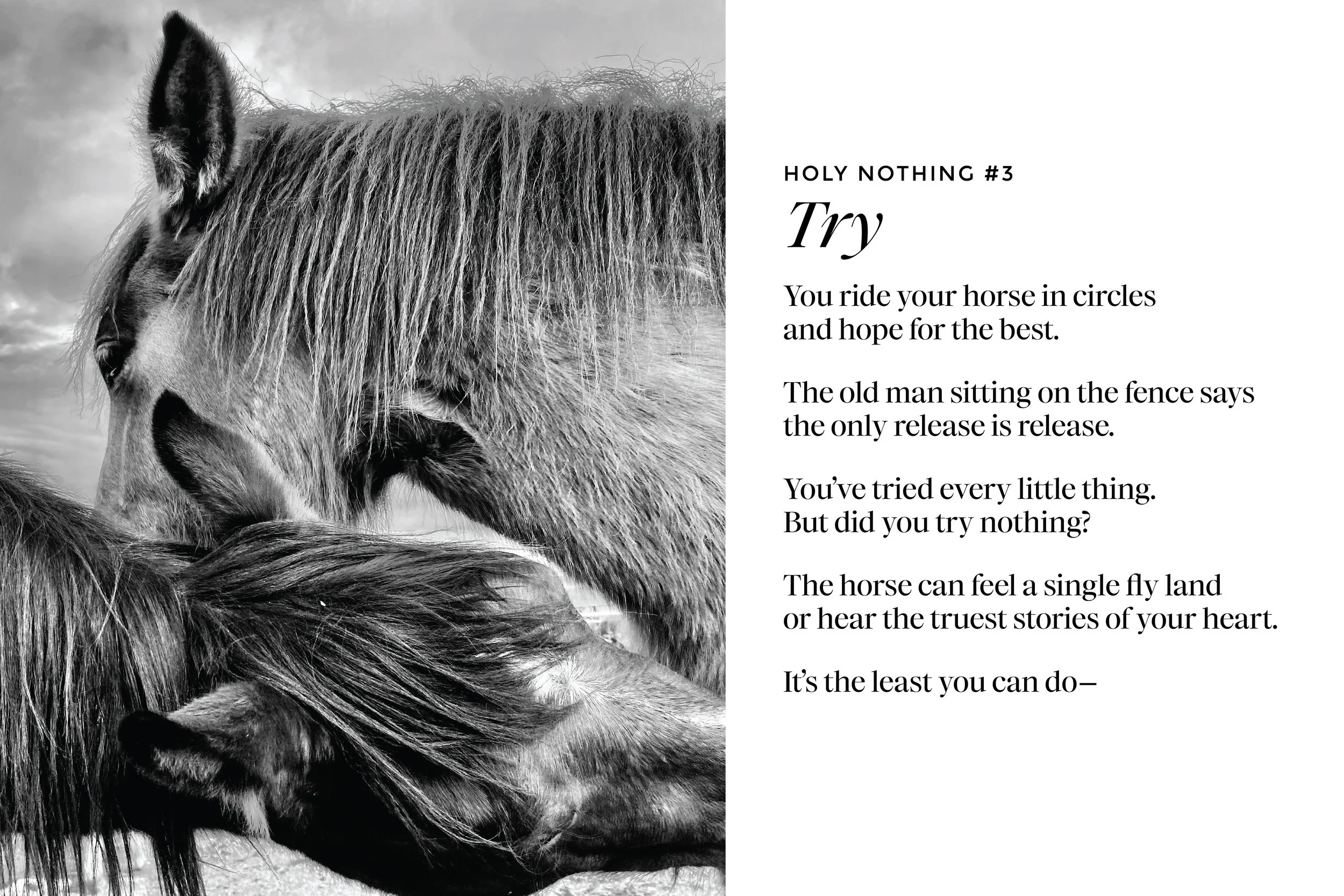
“Holy Nothing is a book of thresholds—those places between leaving and staying, grief and desire, silence and whatever comes after silence. Beth Anstandig listens there, and she listens with her whole body. In these poems, horses, dogs, birds, stones, trees, and weather are not scenery. They are witnesses and companions, sometimes even instructions. This book knows darkness, but it knows, too, that darkness is not empty. Something is breathing there. Something is waiting to become song. Again and again, these poems return us to the difficult miracle of being alive—to the heart, still beating, still learning what it can carry and what it must set down.”
Alberto Ríos, Director, Virginia G. Piper Center for Creative Writing, Arizona State University, Regents’ Professor and Professor of Letters
What I've found most engaging in these finely wrought lyrics by Beth Anstandig is her speaker's deep concentration on each moment. It's like a note sounding loud or made silent to question. The questions are made from mind and sense, an awareness of loss and of becoming a lost self, alone and trying to understand how and why does it happen. She asks in a unique way, an honest query in a style oftentimes hinging on ifs and declarations she submits to both severe and relenting scrutiny, notes written in the air and impossible for her to transcribe. Even if the messages are clear she has to find the door that would open, leading to release, freedom from the pain of a self whose generous nature, whose loving core has brought her to this incomprehensible place. Her voice is her unraveling self connecting with words and her body-walking, circling, listening to the fields, sky, birds, ghosts, and many other lost souls. There is this and an internal landscape once known to her as solid, not this unknown, mysterious flow of darkness, never still enough for her to sense, to know where home is. These poems are a journey, a Movement-Music you can be thankful you heard. Perhaps you too will become aware of those unheard notes, those rests of the in-between, what a psyche can know and not know at the same time. You may well discover a thing or a Holy Nothing, a Real gift for us, made of love's slow-stepping rhythms.
Jeannine Savard
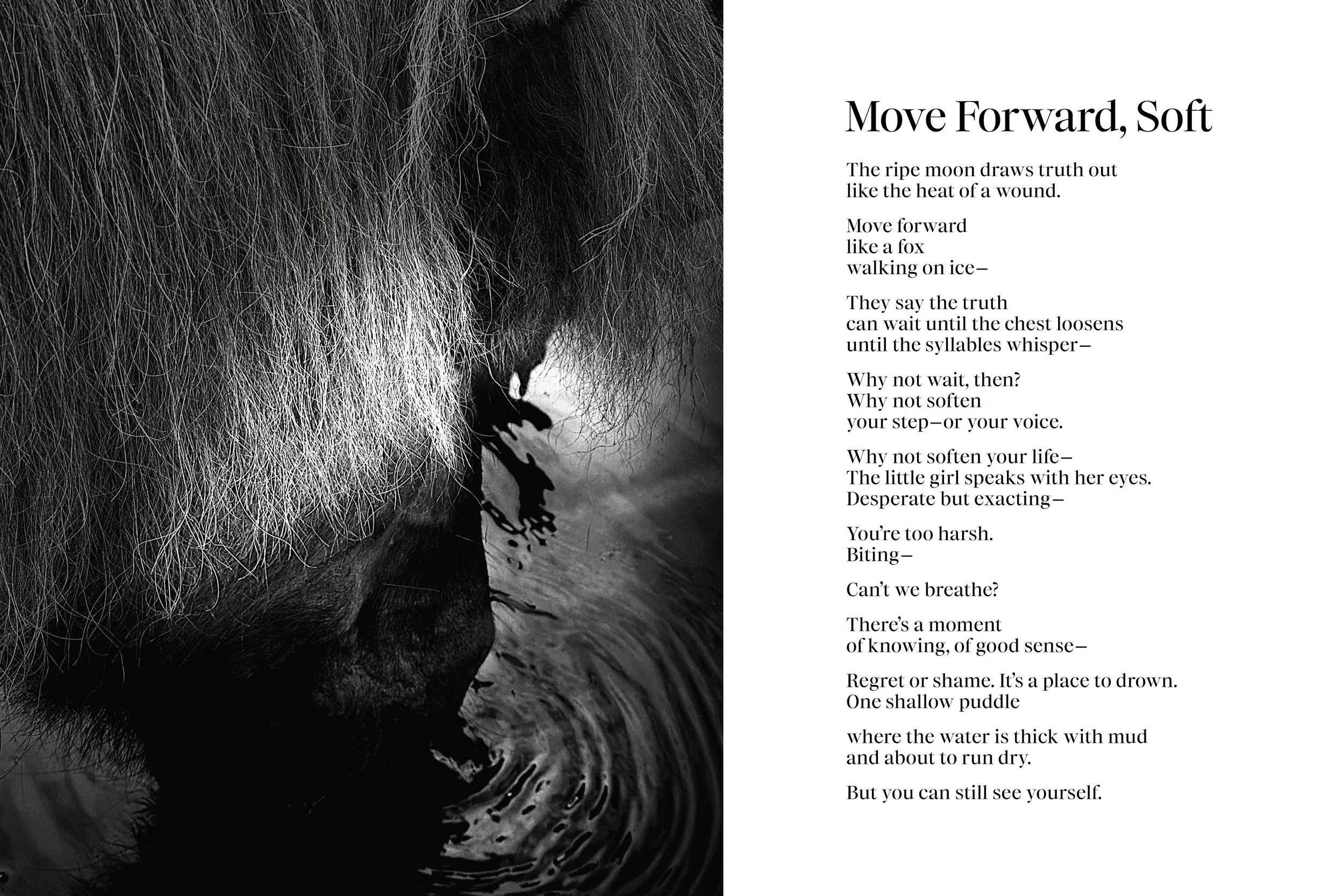
Both elegy and investigation into the self and the universe, Beth Anstandig’s, Holy Nothing, is an intimate, four part aria that instructs the reader to listen, to stay, to try, but ultimately, to behold. In a place where the ‘ripe moon draws truth out/like the heat of a wound’—oranges, bees, and even scraps become artifacts of belief lost and belief becoming. Through careful repetition and deep observation of the natural world, Anstandig’s poems ask the same of love as they do of living: how does one take back the self after loss, and how is it that we come to distinguish the self from the beloved in the first place? This book answers with a chord that is both haunting and at the height of release.
Andrea England, winner of the 2024 Patricia Dobler Award
Holy Nothing dissolves the borders we believe we know—from body blanketed in skin to sounds under cover of silence—and plunges us into a realm of unknowing that invokes the beauty in absence, the sacred in wings and dust. In pure, plump, holy nothing, even snow shines “all color turned and wrung into a void.” Anstandig calls us into the space between lines and life, with "all the refugees of the heart," to “call it closer,/ to go deeper.” Holy Nothing is majestic: the words that leave us longing for our very breath reconfigure us, shift us into a deeper knowing with the ghosts, the bees and horses—the ripe rawness our body-spirits have sensed all along. We are in awe of Anstandig’s ability to cloak us with “the veil between life and living” and make us feel safe in its darknesses—and oh, how these "empty" spaces love us by turning our thinking inside out!
Poetry Midwives,
Lake Angela and Sara Ries Dziekonski